
.2604200617576.png)
Most homeowners notice small issues from time to time — a flickering light, a slow drain or a strange noise from an HVAC system. The challenge is knowing whether these are just harmless inefficiencies or signs of something more serious.
As these issues start to show up more often, it's natural to begin questioning what they mean, and whether it's time to have your home systems checked.
Understanding these warning signs will help you determine what's normal and what may point to a potential safety concern.
What are common home warning signs I shouldn't ignore?
Small home issues often don't draw too much attention and can easily be overlooked, especially when everything is working. The real warning sign is how often the issue occurs, and whether it's becoming more noticeable over time.
For example:
- A one-time flicker may not mean much, but repeated flickering can point to electrical instability.
- A slow drain once may be normal, but recurring backups can signal a deeper blockage.
- Occasional HVAC system noise may be expected, but new or louder sounds often indicate wear or strain.
In many cases, it's not a single event that matters. It's the pattern.
Not every issue is dangerous. But when something becomes consistent, worsens, or starts affecting other parts of the home, it may be a sign that the problem is progressing beyond normal wear and tear.
Are small electrical issues dangerous?
Sometimes, but not always.
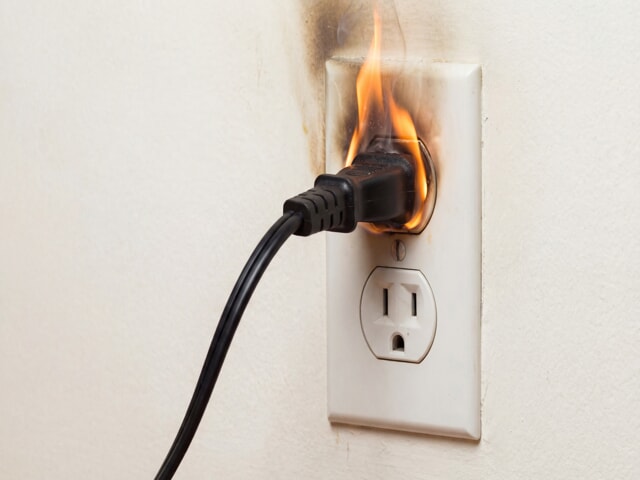
For example, a breaker that trips once after plugging in a new appliance may not be a problem. However, frequent electrical issues can signal something more serious, such as overloaded circuits, loose or deteriorating wiring, and failing electrical components.
These conditions can increase the risk of overheating or electrical fires if left unaddressed. Many homeowners try simple fixes first, like resetting their breaker, before calling a professional. When issues keep coming back, however, it's usually a sign something deeper needs attention.
Can small plumbing issues become a bigger safety problem?
Yes, especially over time.
A slow drip or minor leak may seem harmless, but water has a way of spreading into areas you can't see. Moisture issues are more common than many homeowners realize. Research from the National Institute for Occupational Safety and Health (NIOSH) estimates that nearly half of buildings show signs of dampness or mold, often linked to hidden water exposure.
What starts as a small issue can escalate quickly. In many cases, mold can begin developing within 24 to 48 hours of moisture exposure.
Over time, this can lead to structural damage or even moisture near electrical wiring.
Water and electricity don't mix — and a simple plumbing issue can eventually create electrical hazards if not addressed early.
Can dirty air ducts be a health or safety risk?
Your ductwork affects the air circulating throughout the entire home.
Over time, dust, debris, and other contaminants can build up inside the duct system. When this happens, those particles may be distributed from room to room every time the HVAC system runs.
This can lead to:
- Persistent dust settling on surfaces
- Uneven or stale indoor air
- Musty odors caused by moisture inside ducts
- Circulation of contaminants throughout multiple areas of the home
Moisture is a key concern. In humid conditions, condensation inside ductwork can create an environment where mold may develop — and once introduced into the system, it can spread through the air supply.
Not all dust in ductwork is harmful. But when buildup, odors, or air quality concerns become noticeable across the home, it may point to a larger air distribution issue worth evaluating.
Can an unchanged air filter be a health concern?
Air filters directly impact how well your system can clean and move air.
They're designed to trap airborne particles before they enter your HVAC system. When they become clogged, two things can happen: particles may bypass the filter and airflow can become restricted.
This can lead to:
- Reduced airflow from vents
- Increased strain on HVAC components
- Dust and allergens circulating due to reduced filtration
- Inconsistent airflow throughout the home
Unlike ductwork, a clogged filter affects how air moves and how clean it is at the source.
That being said, a dirty filter doesn't always create an immediate health risk. But over time, restricted airflow and reduced filtration can impact both air quality and system reliability.
When should homeowners take action?
Not every issue requires immediate service, but that doesn't always mean it's safe.
A non-emergency issue is typically something isolated or occasional, with a clear explanation. An unsafe condition, on the other hand, is often defined by escalation or impact across multiple systems.
Persistent electrical issues, ongoing water exposure, or system behavior that continues to change over time should be evaluated sooner rather than later, even if everything is still technically "working."
According to the U.S. Fire Administration, thousands of residential fires each year are tied to electrical issues — often starting from conditions that went unnoticed or unaddressed. Situations involving burning smells or complete system failures require prompt attention to protect the home and the people in it.
Situations involving burning smells, active leaks near electrical components, or complete system failures require prompt attention to protect the home and the people in it.
For homeowners in Ocala, having access to responsive service matters in these moments. Patrick's provides 24/7 emergency support, so help is available without waiting or uncertainty.
What's the next step if something doesn't feel right?
Some issues can be monitored. Others can wait for a scheduled appointment. But when something crosses the line into a potential safety concern, waiting isn't the right move.
When warning signs appear across more than one system or become more noticeable over time, taking a broader look at the home can help identify what's happening behind the scenes.
In a previous blog, the benefits of evaluating HVAC, plumbing, and electrical systems together were explored in more detail, particularly how this approach can reveal issues that might otherwise go unnoticed.
For homeowners in Ocala, this kind of proactive step can help prevent small concerns from turning into more disruptive problems.
When something doesn't feel right, it's worth taking seriously. Acting early helps protect not just the home, but the people and pets inside it. Patrick's is the call you can count on.